Last revised: October 30, 2026
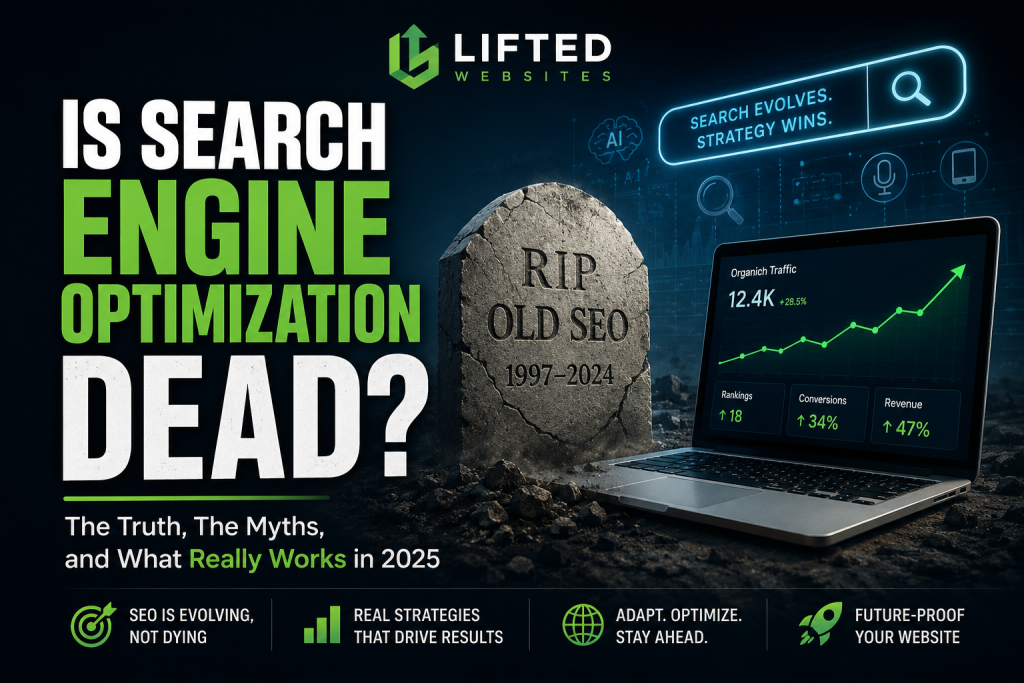
No. SEO is not dead in 2026. The old version is.
AI changed where people search and what gets clicked, not whether businesses get found through search. Search engines still sent 86% of all referral traffic to US websites in September 2026, and AI tools like ChatGPT build their answers from pages that SEO already got indexed and ranked.
Every few years someone declares SEO dead. This time the case sounds convincing. Google puts AI Overviews on top of a big share of results, most searches now end without a click, and millions of questions that used to go to Google now go to ChatGPT, Gemini, Claude and Perplexity.
I’ve done SEO since 2009, and I’ve heard “SEO is dead” after Panda, after Penguin, after voice search and after every big Google change since. Here’s what is actually true in 2026, with public data, our own call tracking numbers, and what I tell clients who ask.
What died, and what still works
SEO didn’t die. A specific set of tactics did. If your SEO still looks like the left column, it really is dead. The right column is what ranks and gets cited now.
| What died | What replaced it |
| Keyword stuffing and one page per keyword variation | Pages that fully answer a topic and cover the questions around it |
| Mass-produced thin blog posts | Fewer pages with original data, real experience and a named author |
| Ranking #1 as the only goal | Ranking and being the source AI Overviews, ChatGPT and Perplexity quote |
| Google-only thinking | Google, Bing (which feeds ChatGPT search), Google Maps and AI assistants together |
| Paid links and link schemes | Reviews, real mentions and a consistent brand across the web |
| Traffic as the scoreboard | Tracked calls, form leads and revenue |
The honest part: informational traffic took a real hit. A “how to” question that used to send you a visitor often gets answered right on the results page now, and some of those clicks are not coming back. That’s why the goal moved from ranking alone to being the business that gets named and called.
Is AI replacing SEO?
No. AI search tools depend on SEO rather than replace it. ChatGPT, Google AI Overviews, Perplexity and Gemini don’t invent their answers. They pull from web pages that are crawlable, indexed and trusted, then summarize them. A page that search engines can’t find or don’t trust is a page AI tools won’t cite.
- Google says its AI features run on the same core ranking systems as regular search, in its own guidance for site owners. There is no separate AI index to game.
- Ahrefs found about 38% of AI Overview citations come from pages already in the top 10 organic results.
- ChatGPT search pulls results through Bing, so a site Bing hasn’t indexed is mostly invisible to it.
What AI did change is the skill set. On top of classic SEO you now need content AI can lift cleanly: direct answers, clear structure, real numbers and an attributable author. People call that GEO or AEO. In practice it’s the same program. We wrote up the scale question separately in Is AI Replacing Google Search?
What the numbers say about search in 2026
Here are the numbers I look at when someone asks whether search still matters. Each one comes with its source and date.
Put those together and you get the real picture. AI use is huge and growing, but it sends very little traffic to websites so far. Search still drives most of it. Fewer clicks per search means the clicks that do happen go to fewer, better pages. That raises the bar for SEO. It doesn’t remove the need for it. Our full dataset is on the AI search statistics page.
What we see in our own call logs
Public studies are useful, but phone calls are what pay the bills, so we track every one in CallRail. Across 4,555 inbound calls for the businesses we work with from July 1 to September 30, 2026, 70.5% came from Google (Ads, organic search and Google Business Profiles) and 1.4% came from AI assistants, mostly ChatGPT.
Two things stand out. First, search is still where the phone calls come from, by a wide margin. Second, AI calls are small but different: 82% of callers who found a business through an AI assistant were first-time callers, against 57% of all callers. AI is sending new customers, and the businesses it recommends are the ones with strong SEO underneath.
One example from a single dental client last month (Sept 29 to Oct 28, 2026): 25 tracked calls, 7 from Google organic search with an average call length of 4 minutes 46 seconds, and 2 from ChatGPT search. Two AI calls isn’t a flood. But a year ago that line was zero.
💡 How to read these numbers
This is our clients’ data, not the whole internet: 26 businesses, mostly local service companies, and some accounts include Google Ads. AI visits with no referrer get counted as direct, so the AI figures are a floor, not a ceiling.
Why Meta and Anthropic still hire SEOs
If SEO were dead, the companies blamed for killing it wouldn’t pay top dollar for it. In 2026 Meta posted an SEO Strategy Manager role at $152,000 to $213,000 plus equity, and Anthropic, the company that makes Claude, posted an SEO Lead role at $255,000 to $320,000 to own organic search for claude.ai and its docs.
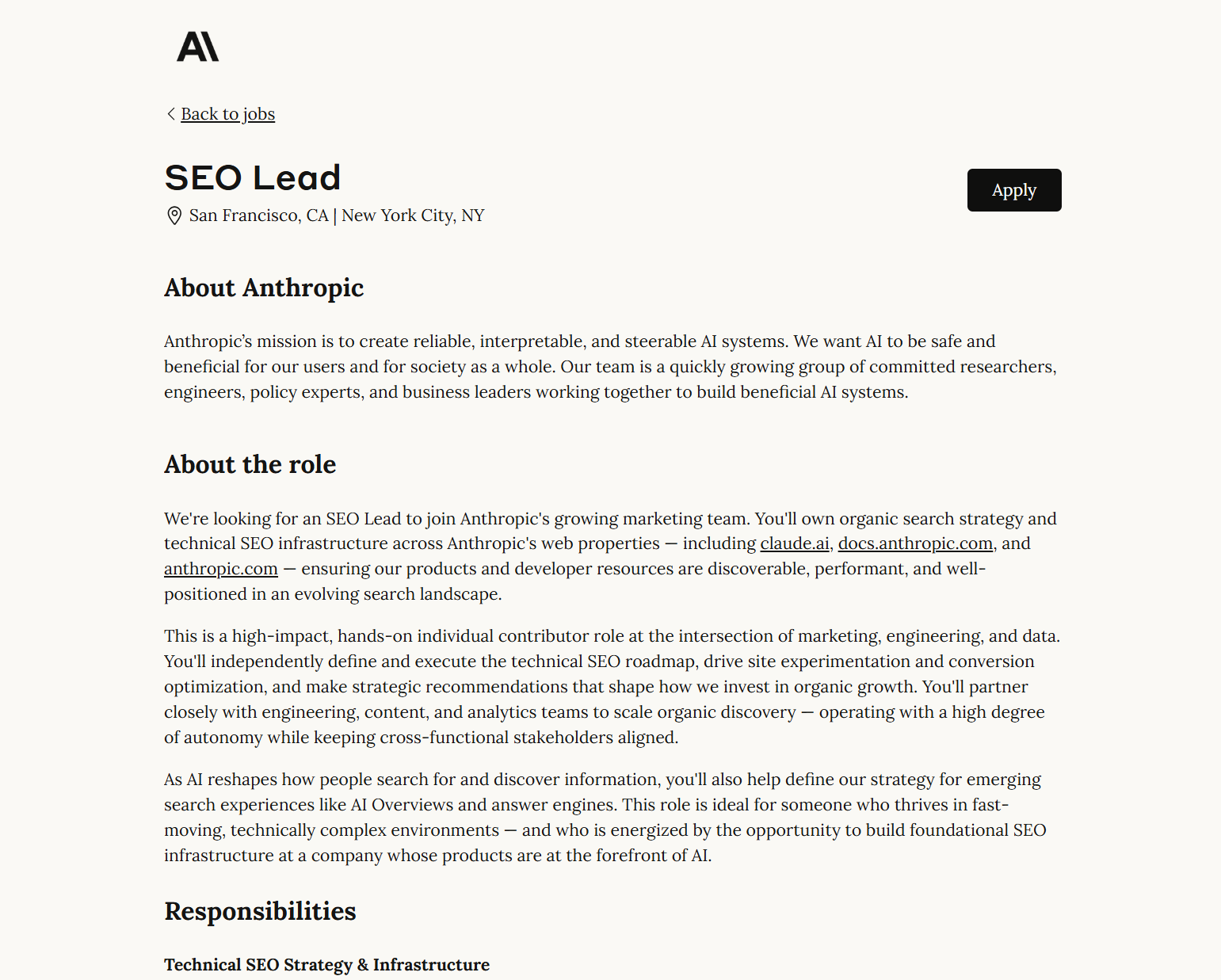
Both listings ask for the same three things: technical SEO (crawling, structured data, site speed), GEO and AEO so AI engines cite the company, and search tied to revenue rather than vanity traffic. An AI lab paying six figures for search visibility is about as clear an answer as you’ll get.
Will SEO exist in 5 years?
Yes, as long as people look for businesses online and AI tools read the web to answer them. The name may change and the screens will keep changing, but the job stays the same: make sure the right people find you, trust you and contact you. In five years more of that will happen inside AI answers and fewer people will click ten blue links. The businesses that win will be the ones AI tools already know, quote and recommend, and that comes from the same work SEO has always been.
What to do now so search and AI both find you
This is the short list I give business owners who want to stay visible as search shifts toward AI:
- Answer the question first. Put a direct two- or three-sentence answer at the top of each page and under each heading. That’s the part AI Overviews and ChatGPT lift.
- Publish what only you know. Your prices, your process, your numbers, your service area. AI tools favor specific facts they can attribute to a named business.
- Make the site easy for machines to read. Structured data, fast pages, prices in plain text instead of images, and no blocks on AI crawlers like GPTBot and ClaudeBot in robots.txt.
- Get indexed by Bing too. Submit pages through Bing Webmaster Tools or IndexNow, because ChatGPT search relies on Bing.
- Track calls, not just rankings. Call tracking shows which channel, including AI, actually brings customers.
If you’d rather have it done for you, that’s what our AI SEO services cover, from local plans starting at $800 a month to national programs. Pricing is published on the local SEO packages page, no sales call needed. For ChatGPT specifically, see our ChatGPT SEO guide.
Is SEO dead? FAQs
Is SEO dead in 2026?
No. Search engines still sent about 86% of referral traffic to US websites in September 2026, according to StatCounter. What died is old-style SEO like keyword stuffing and thin content. Modern SEO also has to earn citations in AI Overviews and ChatGPT.
Is SEO a thing anymore?
Yes. Companies including Meta and Anthropic posted senior SEO roles in 2026 paying up to $320,000. Across 4,555 calls Lifted Websites tracked for clients in Q3 2026, 70.5% came from Google, so search is still the main way customers find local businesses.
Is AI replacing SEO?
No. AI tools like ChatGPT and Google AI Overviews build answers from indexed, trusted web pages, so they depend on SEO. Ahrefs found about 38% of AI Overview citations come from the top 10 organic results. Good SEO is what makes a page eligible to be quoted.
Will SEO exist in 5 years?
Yes. As long as people look for businesses online and AI tools read the web to answer them, businesses will need to be findable and trusted. More discovery will happen inside AI answers, so SEO will focus more on being cited and recommended, not only ranked.
Is SEO worth it for a small business in 2026?
Yes, when it targets buyer-intent searches and is measured in calls and leads. Local SEO from Lifted Websites starts at $800 a month with published pricing, which costs far less than the $150,000-plus salaries big companies pay in-house SEO leads.
What’s the difference between SEO, AEO and GEO?
SEO is ranking in search results. AEO (answer engine optimization) targets direct answers like featured snippets and AI Overviews. GEO (generative engine optimization) gets AI tools like ChatGPT, Perplexity and Claude to cite you. Most of the work overlaps, so they run as one program.
Find out if Google and ChatGPT can find you
Free SEO and AI visibility audit: where you rank on Google and the map, and whether ChatGPT and AI Overviews mention you.
📞 Or call us directly: (888) 863-7421 | 6815 E Camelback Rd, Scottsdale, AZ 85251