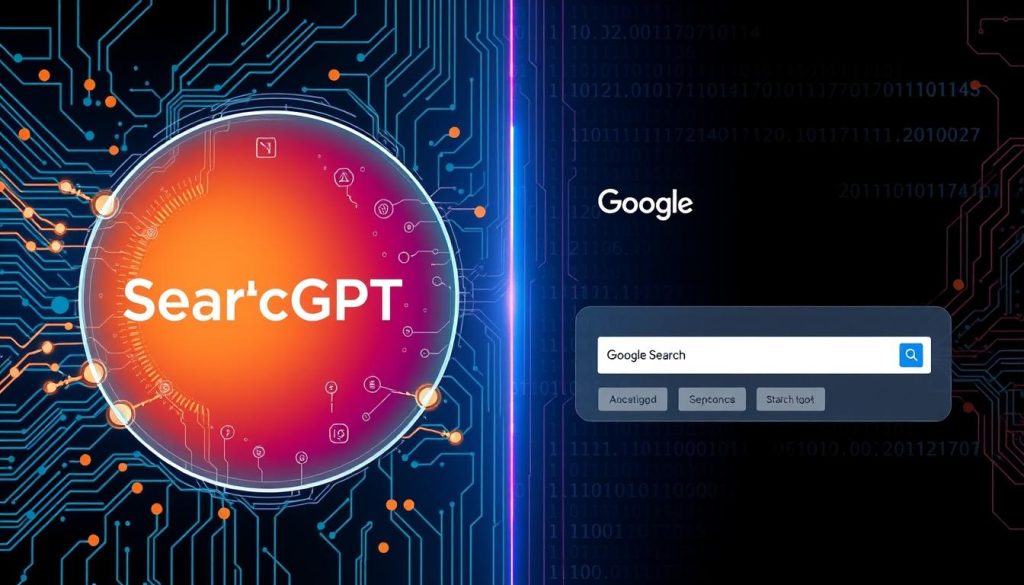
Did you know ChatGPT Search had 200 million users in August 2024? As businesses adjust, knowing SearchGPT and Google’s differences is key. Gartner predicts a 25% drop in search volume by 2026, changing online search.
Google leads with over 90% market share, using keyword matching. SearchGPT, however, gives direct answers and understands user queries. This could change how businesses optimize online.
SearchGPT marks a new search era, focusing on answers over links. This shift will affect SEO, making the searchgpt vs google debate timely.
Google’s model is based on ads and a huge web index. SearchGPT offers a better user experience with its ad-free, personalized interface. This could challenge Google’s lead, especially in technical searches. So, what makes them different?
Key Takeaways
- Google holds over 90% of the global search engine market share.
- SearchGPT reported 200 million weekly average users in August 2024.
- SearchGPT prioritizes contextual, conversational answers.
- Unlike Google’s ad-centered model, SearchGPT remains ad-free.
- Understanding the searchgpt comparison with google is vital for modern SEO strategies.
Introduction to SearchGPT and Google Search
In the fast-changing world of search engines, SearchGPT and Google Search are key players. Google has about 90% of the search engine market. But OpenAI’s SearchGPT is a strong competitor, offering a new way to find information.
SearchGPT and Google have different ways of working. This comparison will show which one is better for you.
What is SearchGPT?
SearchGPT is an AI tool from OpenAI. It uses natural language processing to understand and answer questions. It gives direct answers, unlike Google, which shows web links.
SearchGPT is good at giving detailed answers. It’s great for customer support and content creation. Search Engine Journal says it works well with ChatGPT, beating tools like Microsoft Copilot and Google Gemini.
What is Google Search?
Google Search is a big name in internet searching. It indexes billions of web pages and uses many sources like news and blogs. It ranks sites based on relevance and popularity.
Google has many features like videos and maps. It shows over 100 results for broad questions. It’s good for finding lots of information.
SearchGPT and Google Search are good for different things. SearchGPT is great for detailed answers. Google is better for finding lots of information, like for research or shopping.
SearchGPT vs Google: A Detailed Comparison of Features and Functionality
The debate between SearchGPT and Google search engines focuses on different aspects. These aspects define each tool’s user experience and functionality. By looking at their features, we learn how they meet user needs.
Search Results Presentation
SearchGPT presents search results in a conversational way, offering direct and human-like answers. In contrast, Google shows a ranked list of results, encouraging users to explore more. This shows how both platforms cater to different user preferences for finding information.
Personalization and Contextual Responses
Personalization is crucial in today’s search engines. Google uses historical behavior and location data to customize search results. SearchGPT, on the other hand, remembers context and previous queries for a more personalized conversation. This makes SearchGPT a great alternative to Google for those who want a conversational AI experience.
Content Type and Information Sources
Google is great at indexing web pages, multimedia, and interactive tools like calculators. SearchGPT mainly gives text-based answers, using real-time web access for current info. This shows how SearchGPT and Google offer different types and amounts of content to users.
Advertising and SEO
The advertising models of SearchGPT and Google Search Engine show their strategic priorities. Google has ads in search results, affecting visibility and user experience. SearchGPT is currently ad-free, focusing on delivering information. This difference could change keyword strategies and SEO tactics. Ad-free environments might offer a cleaner user experience, but SearchGPT might introduce premium features or subscription models in the future, as recent insights suggest.
| Feature | SearchGPT | |
|---|---|---|
| Search Result Presentation | Conversational, direct | Ranked list, interactive |
| Personalization | Contextual, dialogic | Behavior and location-based |
| Content Types | Text-based responses | Web pages, multimedia, widgets |
| Advertising Model | Ad-free | Ad-integrated |
Impact on User Interaction and Business Strategies
In today’s digital world, knowing how SearchGPT and Google work together is key for businesses online. Both search engines offer different ways to engage users, affecting how businesses market and attract customers.
User Engagement
SearchGPT gives direct, chat-like answers, while Google tailors results to your past searches. This change could change how we interact online. Instead of just clicking links, SearchGPT search engine review points to a focus on Answer Engine Optimization (AEO). Businesses might need to find new ways to keep users engaged, aiming for more meaningful interactions.
Impact on Content Marketing
The differences between SearchGPT vs Google search engine have big implications for marketing. SearchGPT’s quick, chat-like answers might make users less likely to leave its site. This could change how businesses make their content, focusing on being short and to the point. Google’s model, which shows many links, affects SEO by sending more visitors to sites.
Customer Acquisition and Analytics
Looking at customer strategies, SearchGPT search engine review shows a challenge. Unlike Google, which has tools like Google Analytics, SearchGPT doesn’t have built-in analytics. This makes it harder for businesses to track user behavior and get insights. So, businesses might have to find new ways to understand data and user behavior to attract customers effectively.
| Aspect | SearchGPT | Google Search |
|---|---|---|
| User Engagement | Conversational, direct answers | Customized, link-based results |
| Content Marketing Impact | Reduces need for external clicks | Increases website traffic via links |
| Customer Acquisition | Lacks built-in analytics | Comprehensive analytics tools |
Conclusion
The searchgpt comparison with google shows how each platform has its own strengths and weaknesses. Google Search is the top choice for searching the web, thanks to its vast index and smart algorithms. On the other hand, SearchGPT by OpenAI offers a new way to search with its chat-like interface and quick answers.
Google’s success comes from its huge index and advanced algorithms like PageRank. It gives users detailed search results and integrates well with other Google services. This makes it great for deep research and finding different views on topics.
SearchGPT, however, focuses on giving quick, accurate answers using deep learning and natural language processing. It’s perfect for schools, customer service, and when you need fast, clear info. Its chat-like style and clear sources make it a strong google search engine alternative.
Both Google and SearchGPT collect user data to improve their search results. They serve different needs, so businesses and people need to know when to use each. Knowing when to choose Google for detailed research and SearchGPT for quick answers is key in our digital world.